
Affiliate disclosure: As an Amazon Associate we earn from qualifying purchases. Links to Amazon in this post may earn us a commission at no extra cost to you. Learn more.
This guide is for people who work or game at a desk in the evening and want light on the keyboard and notes without a lamp taking up space or bouncing glare off the screen. A monitor light bar sits on top of the display and points light down at the desk. What follows is based on manufacturer specifications and published reviews, not hands-on testing, and we leave out prices because they change often.
What matters when buying
Will the clamp fit your monitor? This is the most common reason light bars get returned. Makers publish a range of monitor thicknesses they support. BenQ’s ScreenBar lists 1 cm to 3 cm, while the newer ScreenBar Halo 2 lists 0.43 cm to 6 cm and both flat and curved screens. Measure the thickness at the top of your monitor, including any bulge in the back, before you order. If you are planning to mount your screen on an arm, our monitor arm guide covers how that changes the fit.
Automatic dimming. Some bars include a sensor that adjusts brightness to the room. BenQ says the ScreenBar uses an ambient sensor to top up the light toward a 500 lux target, and Creative Bloq says the Quntis ScreenLinear Pro+ auto-dims to the room. It is a nice convenience if you do not want to fiddle with brightness through the day.
Color temperature range. Warm light (around 2700K) suits evenings, cool light (up to 6500K) suits daytime. BenQ lists eight settings from 2700K to 6500K on the ScreenBar, and Creative Bloq lists 3000K to 6500K for the Quntis.
Color rendering. If you edit photos or just want natural-looking colors, look for a stated CRI. BenQ lists Ra above 95 on both of its bars. Creative Bloq notes that CRI is not listed for the Quntis.
Power and controls. Light bars are USB-powered, but they need a source that supplies enough current. BenQ says the ScreenBar needs 5V and at least 1A. Controls vary from buttons on the bar to a wireless dial.
Space for a webcam. The bar sits where many people mount a webcam. Check whether the model has an answer for this, such as the optional webcam accessory BenQ lists for the Halo 2, or plan to put your camera elsewhere. Our webcam guide can help.
What to ignore. Headline lux numbers measured at a specific distance do not translate directly into how bright your own desk will feel, and anything promising to protect or heal your eyes is marketing, not a spec.
Quick picks
BenQ ScreenBar: for a simple, well-documented option
BenQ’s product page lists an ambient-light sensor, eight color temperature settings from 2700K to 6500K, 15 brightness levels and Ra above 95. It fits flat or curved monitors 1 cm to 3 cm thick, runs from a 5V USB port and measures 45 x 9 x 9.2 cm. BenQ lists coverage of 60 x 30 cm at 500 lux and says it restores your last brightness and color settings when powered on. The drawback is fit: the thickness range is narrower than the Halo 2’s, and the page lists no separate controller. Search for the BenQ ScreenBar on Amazon.
BenQ ScreenBar Halo 2: for bigger desks and curved screens
BenQ’s spec page lists Ra of 95 or more, a dual-color LED, center illuminance above 1000 lux at 50 cm and coverage of 85 x 50 cm at 500 lux. It supports flat and curved monitors from 0.43 cm to 6 cm thick, takes USB-C power at 5V and up to 3A (15W maximum), and uses a separate controller. The lamp is 50 cm wide and weighs 0.8 kg. The drawbacks are size and the controller, which BenQ says has its own lithium battery that needs charging. Search for the BenQ ScreenBar Halo 2 on Amazon.
Quntis ScreenLinear Pro+: for a remote and a lower power draw
Creative Bloq reviewed it and lists 5W power, 3000K to 6500K color temperature, brightness from 5 to 100 percent, USB-C input, a 51 cm lamp weighing 660 g, and a wireless remote with a stepless dial. The clamp has an angle-adjustable counterweight and silicone pads. The reviewer liked the easy setup and the auto-dimming. The cons it lists are that the bar takes up space you might need for a webcam and partly blocks the top of thin-bezel monitors, and the specs do not state a CRI. Search for the Quntis ScreenLinear Pro+ on Amazon.
Which one fits you
Choose the ScreenBar if your monitor is a normal thickness and you want light that adjusts itself. Choose the Halo 2 if you have a thick or curved screen, a wider desk, or want a wireless controller. Choose the Quntis if you want a remote dial and are fine with the missing CRI figure.
Common mistakes
The biggest is skipping the measurement of your monitor. A clamp that is too small will not grip, and one that is too large may not sit flat. Another is mounting a bar over your webcam, then discovering the light spills into the lens. Do not buy the brightest bar for a small desk, because a very bright light can wash out a screen in a dim room. And make sure you have a USB power source that meets the maker’s minimum rather than assuming any port will do.
Bottom Line
A light bar is a small upgrade that makes late-night desk work more comfortable. Measure your monitor first, then match the bar to your screen and desk. The BenQ ScreenBar is a solid starting point, the Halo 2 is the roomier version, and the Quntis is the one to consider for a remote.
FAQ
Do light bars work on curved monitors?
BenQ says the ScreenBar and the Halo 2 support curved monitors, within the thickness ranges it lists. Check your monitor’s rear shape against the maker’s notes before buying.
How do light bars get power?
They run from USB. BenQ says the ScreenBar needs a 5V supply of at least 1A, and the Halo 2 uses USB-C at 5V and up to 3A.
Will a light bar block my webcam?
It can, because both sit at the top of the screen. Creative Bloq flags this as a con for the Quntis ScreenLinear Pro+, while BenQ lists an optional webcam accessory for the Halo 2.
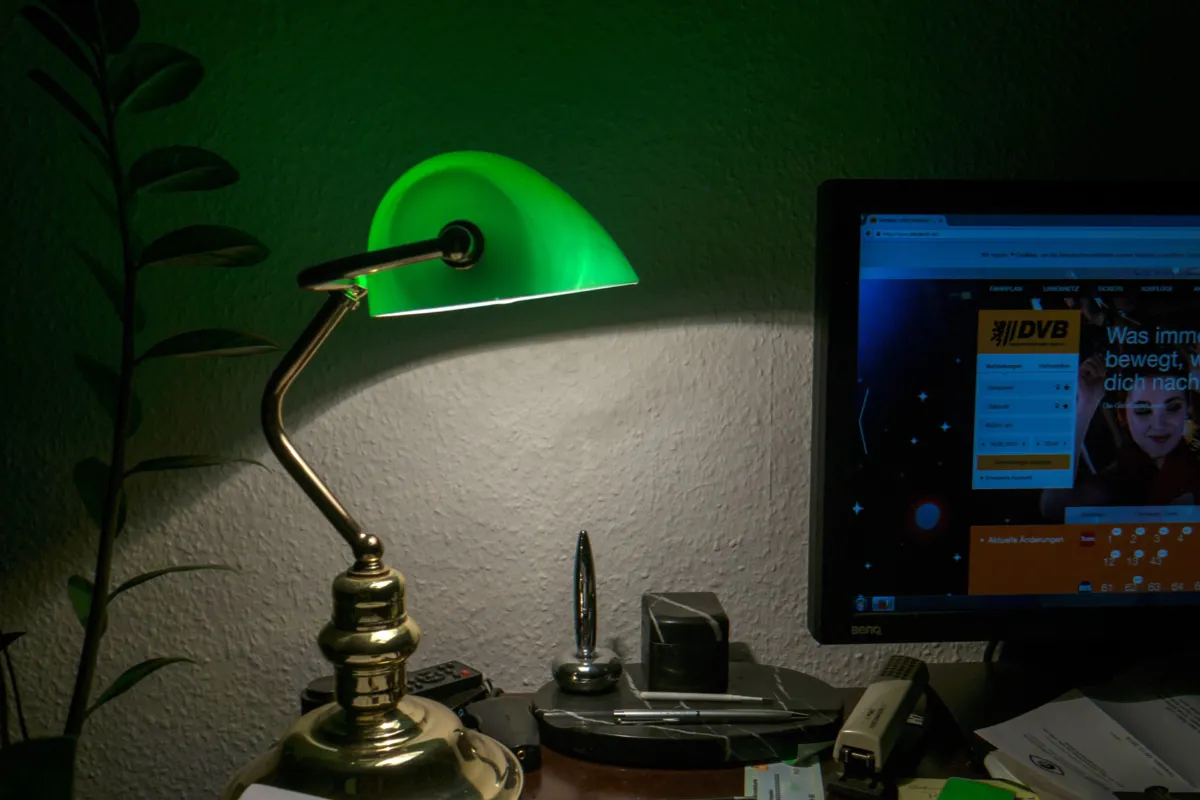
Featured image: Photo by VSchagow via Wikimedia Commons, CC BY-SA 4.0 (desk lamp).
No comments yet. Be the first to share your thoughts below.