
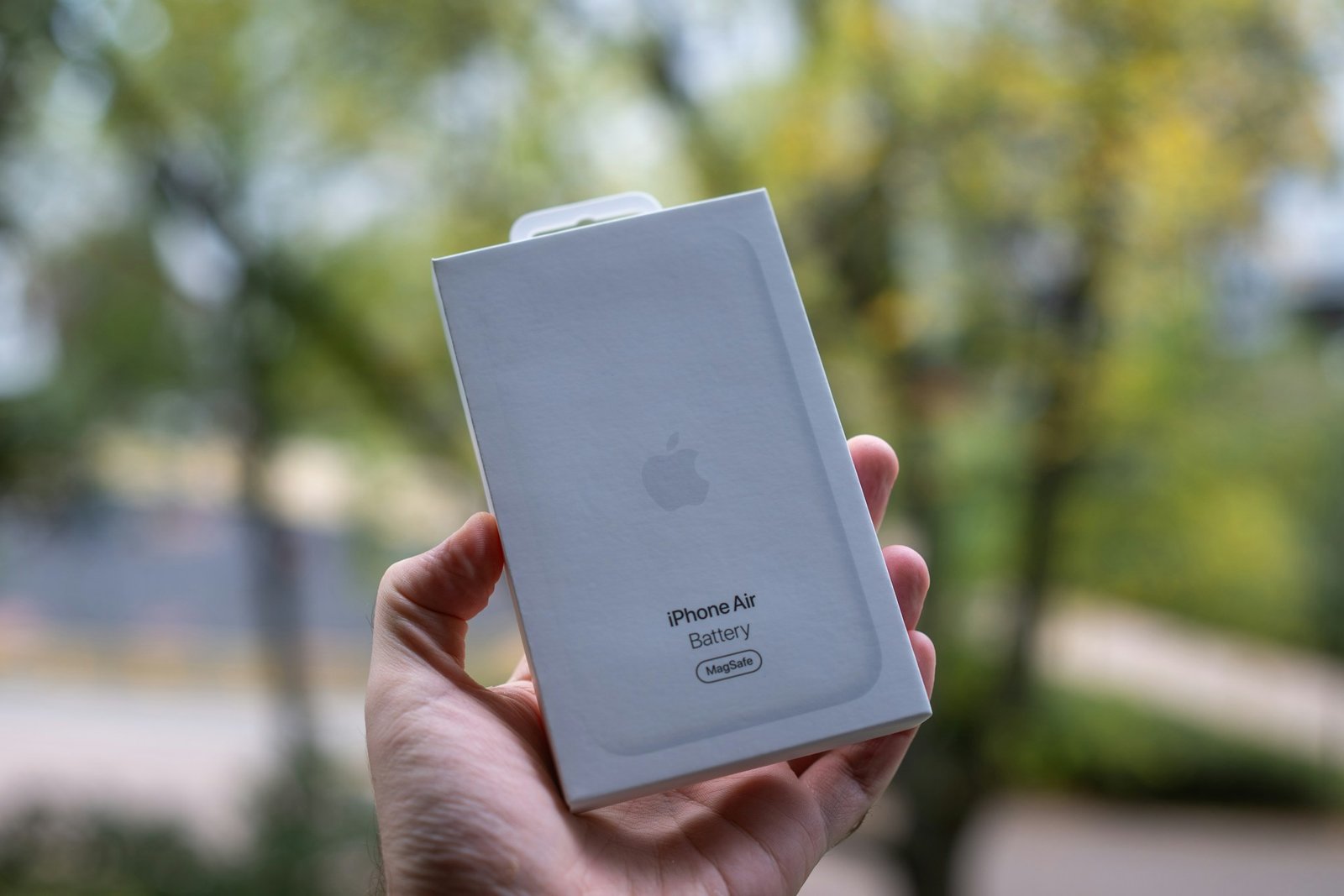
A good power bank should do more than keep your phone alive for a few extra hours.
If you travel frequently, work away from a wall outlet, spend weekends camping, or simply hate watching your battery drop to 5% when you’re nowhere near a charger, a 20,000–30,000mAh USB-C PD power bank can be one of the most useful pieces of tech you own.
But there’s a problem.
Amazon is packed with power banks advertising huge capacities, ultra-fast charging and impressive-looking numbers. A 30,000mAh label might look better than 20,000mAh, but capacity isn’t the only thing that matters. USB-C output, charging wattage, battery efficiency, weight, ports, recharge speed and safety features can make a much bigger difference in everyday use.
So instead of simply recommending the biggest battery, this guide focuses on what actually matters—and the power banks I’d consider first.
Quick Answer: Which Power Bank Should You Buy?

If you want the short version:
Best premium: Anker Prime Power Bank 20,000mAh, 200W
Best value: INIU 20,000mAh USB-C power bank
Best laptop/travel option: UGREEN Nexode 20,000–25,000mAh
Best slim design: Baseus Blade series
Best high-capacity option: UGREEN 25,000mAh models
The exact model and availability can change, so always check the current Amazon listing and specifications before purchasing.
Why 20,000mAh Is the Sweet Spot

For most people, 20,000mAh is a better balance than jumping straight to a massive power bank.
A 20,000mAh battery pack contains roughly 74Wh of stored energy when calculated from a typical 3.7V nominal battery voltage. You won’t get all of that energy at the USB output because power conversion creates losses.
In real-world use, the amount of energy delivered to your device is lower than the number printed on the box.
That’s why you shouldn’t expect a 20,000mAh power bank to provide exactly four or five complete phone charges.
For everyday travel, however, 20,000mAh is still a very useful capacity. It can provide multiple phone top-ups while also giving you enough reserve for earbuds, tablets and other USB devices.
For example, a current 20,000mAh comparison estimates roughly 55–65Wh of usable output after conversion losses, depending on the power bank and conditions.
20,000mAh vs. 25,000mAh vs. 30,000mAh
Here’s where things get interesting.
20,000mAh
Best for:
Phones, tablets, travel, everyday carry and occasional laptop charging.
At around 74Wh, 20,000mAh is a particularly practical capacity for travelers because you get a substantial amount of energy without carrying an enormous battery.
25,000mAh
Best for:
Laptop users, photographers, digital nomads and long trips.
A 25,000mAh battery is approximately 92.5Wh at 3.7V, putting it close to the commonly important 100Wh airline threshold.
Several current 25,000mAh models are specifically designed around laptop charging and travel use.
30,000mAh
Best for:
Camping, extended off-grid use and situations where maximum capacity matters more than portability.
There’s an important catch, though.
A 30,000mAh power bank is roughly 111Wh at 3.7V. That can put it above the commonly used 100Wh threshold for air travel.
Airline rules vary, so if you plan to fly, check your airline’s current battery rules before buying or packing a 30,000mAh model.
For frequent flyers, I’d generally favor a high-quality 20,000mAh or 25,000mAh model.
What Does USB-C PD Actually Mean?

This is one of the most important things to understand before buying.
USB-C is the connector. USB Power Delivery (PD) is the charging technology.
A USB-C power bank isn’t automatically a fast-charging power bank.
For example, two power banks can both have USB-C ports, but one might provide only 20W while another provides 100W or more.
That’s a huge difference if you’re charging a laptop.
Here’s a simple guide:
20–30W: Great for phones and smaller devices.
45W: Good starting point for many tablets and lightweight laptops.
65W: Excellent all-around level for phones, tablets and many USB-C laptops.
100W: Better for demanding laptops and multiple-device charging.
140W+: Designed for power users, high-performance laptops and multi-device setups.
Some of today’s premium models go dramatically beyond what a typical smartphone needs. For example, the Anker Prime 20K is listed with up to 200W total output, while UGREEN offers 20K-class models with output around 145W.
But don’t buy 200W simply because the number is bigger.
Your device determines how much power it can actually accept.
My Recommended 20,000–30,000mAh Power Banks

1. Anker Prime Power Bank 20,000mAh — Best Premium Choice
If you want a premium power bank and don’t mind paying more for better hardware and features, the Anker Prime 20K is one of the first models I’d look at.
It combines a 20,000mAh capacity with very high USB-C output and a color display that can show useful charging information.
Current comparisons list it with 200W total output, two 100W USB-C ports and a USB-A port, making it considerably more capable than a basic phone charger.
Why I like it
- 20,000mAh capacity
- Up to 200W total output
- High-output USB-C ports
- Useful digital display
- Suitable for laptops and phones
- Premium build quality
- Strong choice for frequent travelers
Best for:
Laptop users, professionals, travelers and people who want a buy-once premium power bank.
Check the Anker Prime 20K on Amazon
2. UGREEN Nexode 20,000mAh — Best Alternative to Anker
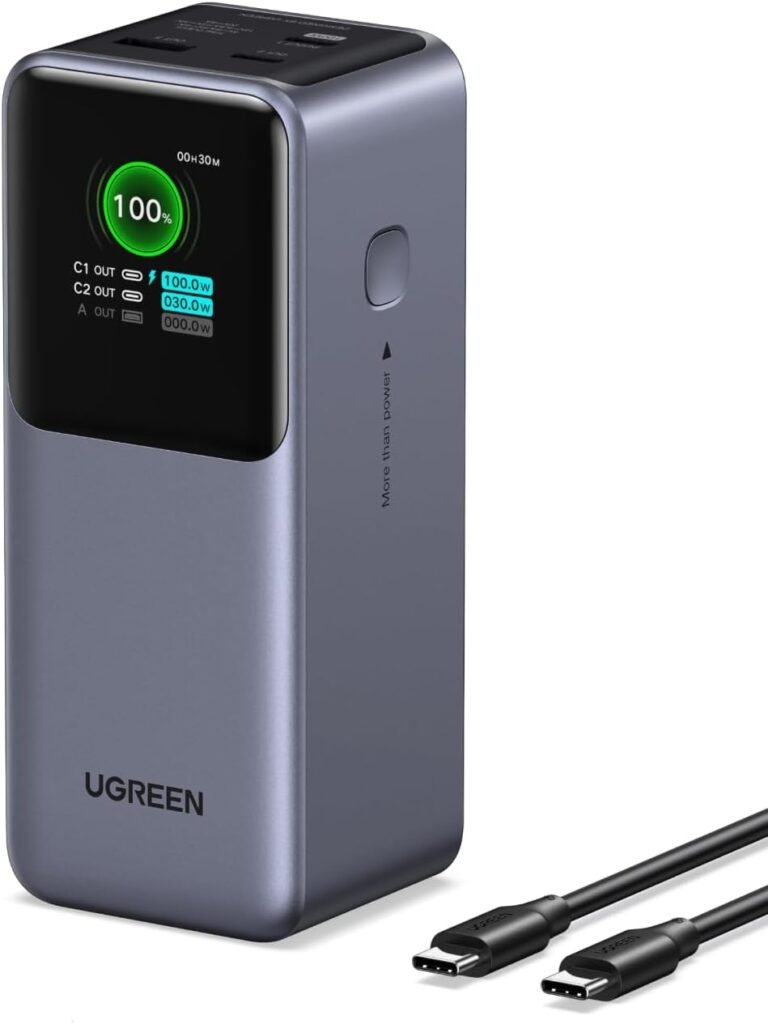
UGREEN has become one of the strongest competitors in the high-output power bank market.
The UGREEN Nexode range is particularly interesting if you want high charging performance without necessarily paying for the most premium Anker model.
Current 2026 comparisons list UGREEN Nexode models in the 20,000mAh class with output around 130–145W, depending on the specific version.
Some versions also include a digital display, which is genuinely useful.
Instead of guessing how much battery is left from four tiny LEDs, you can see more detailed information.
Why it’s worth considering
- High USB-C output
- Laptop-friendly
- Digital display on some versions
- Multiple ports
- Strong capacity-to-performance ratio
- Good alternative to premium Anker models
Best for:
People who want serious charging power without going straight to the most expensive option.
Check UGREEN Nexode Power Banks on Amazon
3. INIU 20,000mAh — Best Budget-Friendly Pick
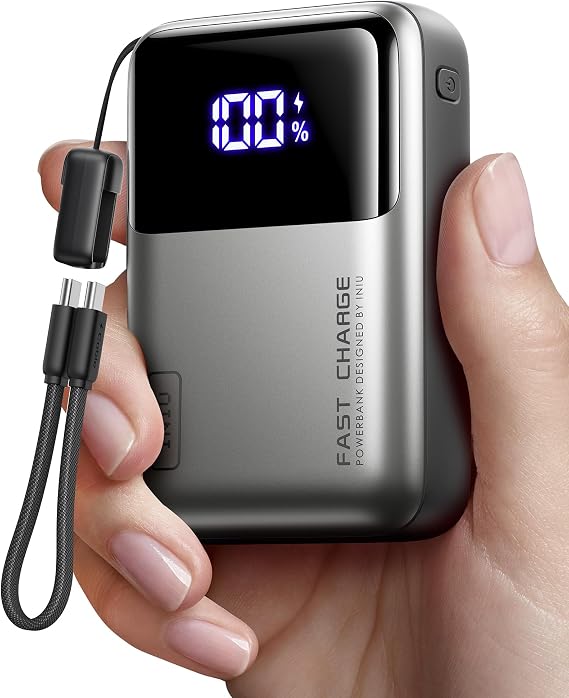
You don’t need to spend $100+ to get a useful high-capacity power bank.
INIU is one of the brands I’d consider when value matters.
The INIU 20,000mAh lineup includes models aimed at everyday phone and tablet users, with some versions offering USB-C fast charging.
One recent 2026 travel comparison highlighted an INIU 20,000mAh model for its compact design, relatively low weight and useful extras such as a digital display and flashlight.
Why it’s interesting
- Affordable
- 20,000mAh capacity
- Compact options available
- USB-C charging
- Useful for phones and tablets
- Some models include a display
- Some models include a flashlight
Best for:
Students, travelers and anyone who wants a practical 20K power bank without spending premium money.
Check INIU 20,000mAh Power Banks on Amazon
4. Baseus Blade 20,000mAh — Best Slim Option

Traditional 20,000mAh power banks can be thick.
That’s where Baseus’ Blade-style designs become interesting.
Instead of making the battery a chunky brick, the Blade design uses a much flatter shape that can slide into a laptop bag or backpack compartment.
A 2026 comparison highlights the Baseus Blade 2 as a slim 20,000mAh option with 100W USB-C output, while user discussion around the Blade series also highlights its slim profile and useful display.
Why choose it?
- Slim design
- Laptop-friendly
- High USB-C output
- Easy to place inside a laptop sleeve
- Digital display on some models
Best for:
Laptop users who hate carrying thick power banks.
Check Baseus Blade Power Banks on Amazon
5. UGREEN 25,000mAh — Best for Extra Capacity
If 20,000mAh isn’t enough but you still want something suitable for travel, 25,000mAh can be a great middle ground.
UGREEN currently offers 25,000mAh models with high USB-C output. One current model comparison lists a UGREEN Nexode 25K at 140W output and approximately 90Wh, which is useful for laptop users while remaining below the 100Wh mark based on its rated energy.
Best for:
- Long travel days
- MacBook and USB-C laptop users
- Camping
- Photography
- Remote work
- Multiple devices
Check UGREEN 25,000mAh Power Banks on Amazon
What About 30,000mAh Power Banks?
I’d be more selective here.
A 30,000mAh power bank sounds fantastic on paper, but you’re adding more weight and potentially creating travel restrictions.
If you’re buying one specifically for camping, emergency backup or extended off-grid use, the extra capacity can make sense.
If you’re buying one for air travel and everyday commuting, I’d probably choose 20,000–25,000mAh instead.
In other words:
20K = everyday sweet spot
25K = excellent for laptops and longer trips
30K = maximum-capacity option for situations where portability isn’t the priority
Don’t Make This Common Mistake: Buying Based Only on mAh
This is probably the biggest mistake people make.
A $30 power bank advertising “30,000mAh” isn’t automatically better than a quality 20,000mAh model.
Look at these specifications instead:
1. USB-C PD wattage
This determines how quickly compatible devices can charge.
2. USB-C input wattage
This determines how quickly the power bank itself can recharge.
A power bank capable of 100W output but only 18W input can still take a long time to refill.
3. Battery capacity in Wh
Wh can make comparisons easier because it represents energy rather than simply cell capacity.
4. Weight
A huge battery isn’t very useful if you don’t want to carry it.
5. Number of ports
If you’re charging a phone, tablet and earbuds simultaneously, multiple ports become valuable.
6. Display
A percentage display is much more useful than guessing from four LEDs.
7. Brand reputation
This is one product category where I’d avoid unknown brands with unbelievable specifications.
You’re carrying a large lithium battery in your backpack. I’d rather buy a reputable model with clearly documented specifications and warranty support than save a few dollars on an unknown product.
Can a 20,000mAh Power Bank Charge a Laptop?

Yes—but the wattage matters more than the capacity alone.
For a lightweight USB-C laptop, I’d look for at least 45W USB-C PD.
For more demanding laptops, 65W–100W is a much safer target.
Some premium power banks now offer 140W or more, but your laptop will only draw what it is designed to accept.
A current 2026 laptop-power-bank guide similarly recommends at least 45W for many laptops, with 65–100W being more appropriate for larger machines.
And remember: a 20,000mAh power bank isn’t a replacement for a large power station.
Think of it as an emergency extension of your laptop battery—not an unlimited external battery.
How Many Times Can a 20,000mAh Power Bank Charge a Phone?
There’s no single answer because phone batteries vary and power conversion isn’t 100% efficient.
For example, a phone with a roughly 4,000–5,000mAh battery may get several meaningful top-ups from a 20,000mAh power bank, but the number printed on both batteries cannot simply be divided to predict real-world charges.
Conversion losses, charging efficiency, heat and the phone’s charging behavior all affect the final result.
That’s why usable Wh is a more useful concept than simply comparing mAh numbers.
What I Would Buy
If I were choosing today, I’d divide the market into four groups.
🏆 Best overall premium
Anker Prime 20K
Choose this if you want high output, premium hardware and a useful display.
💰 Best value
INIU 20K
Choose this if you’re primarily charging phones and tablets and don’t need extreme laptop power.
💻 Best for laptops
UGREEN Nexode 20K/25K
Choose this if USB-C laptop charging is one of your main priorities.
🎒 Best slim travel design
Baseus Blade 20K
Choose this if you want a powerful battery that doesn’t feel like you’re carrying a brick.
A Simple Buying Formula
Don’t overthink it.
If you’re mostly charging a phone:
20,000mAh + 20–30W USB-C PD
If you’re charging a phone + tablet:
20,000mAh + 30–65W PD
If you’re charging a USB-C laptop:
20,000–25,000mAh + 65–100W PD
If you’re charging a high-performance laptop:
25,000mAh + 100W+ PD
If you’re going camping/off-grid:
25,000–30,000mAh, or consider stepping up to a portable power station if you need much more energy.
Final Verdict
A 20,000–30,000mAh USB-C PD power bank is one of those gadgets that seems unnecessary—until the first time your phone dies at the airport, your laptop reaches 8% during a work session, or you lose access to a wall outlet while camping.
For most people, 20,000mAh is the sweet spot. It’s large enough to provide serious backup power without becoming excessively bulky.
If you’re a laptop user, I’d move toward 25,000mAh with 65W–140W USB-C PD.
And if you’re considering 30,000mAh, make sure you actually need the additional capacity before accepting the extra weight and potential airline limitations.
My shortlist would start with Anker Prime for premium buyers, UGREEN Nexode for high-output laptop charging, INIU for value, and Baseus Blade for a slim design. These brands have multiple models, so check the exact wattage and capacity on the Amazon listing before ordering. Current 2026 comparisons support these brands as strong choices in this category.
One final tip: don’t buy the power bank with the biggest number on the box. Buy the one whose capacity, USB-C PD wattage, weight and ports match the devices you actually carry.
That is where you’ll get the most value for your money.
Recommended Amazon Shortlist
Premium: Anker Prime 20K
View on Amazon
High-output: UGREEN Nexode 20K
View on Amazon
Extra capacity: UGREEN 25K
View on Amazon
Value: INIU 20K
View on Amazon
Slim: Baseus Blade 20K
View on Amazon
Disclosure: This article may contain affiliate links. If you purchase through an affiliate link, we may earn a commission at no additional cost to you. Product availability, specifications and Amazon pricing can change, so verify the exact model before purchasing.