Tesla put its driverless Cybercab on public streets in Austin this week with almost no fanfare — no livestream, no stage presentation, just a small group of shareholders and friendly influencers signing NDAs for a quiet ride. Federal regulators noticed within hours anyway.
A Car With No Steering Wheel, No Pedals, No Mirrors
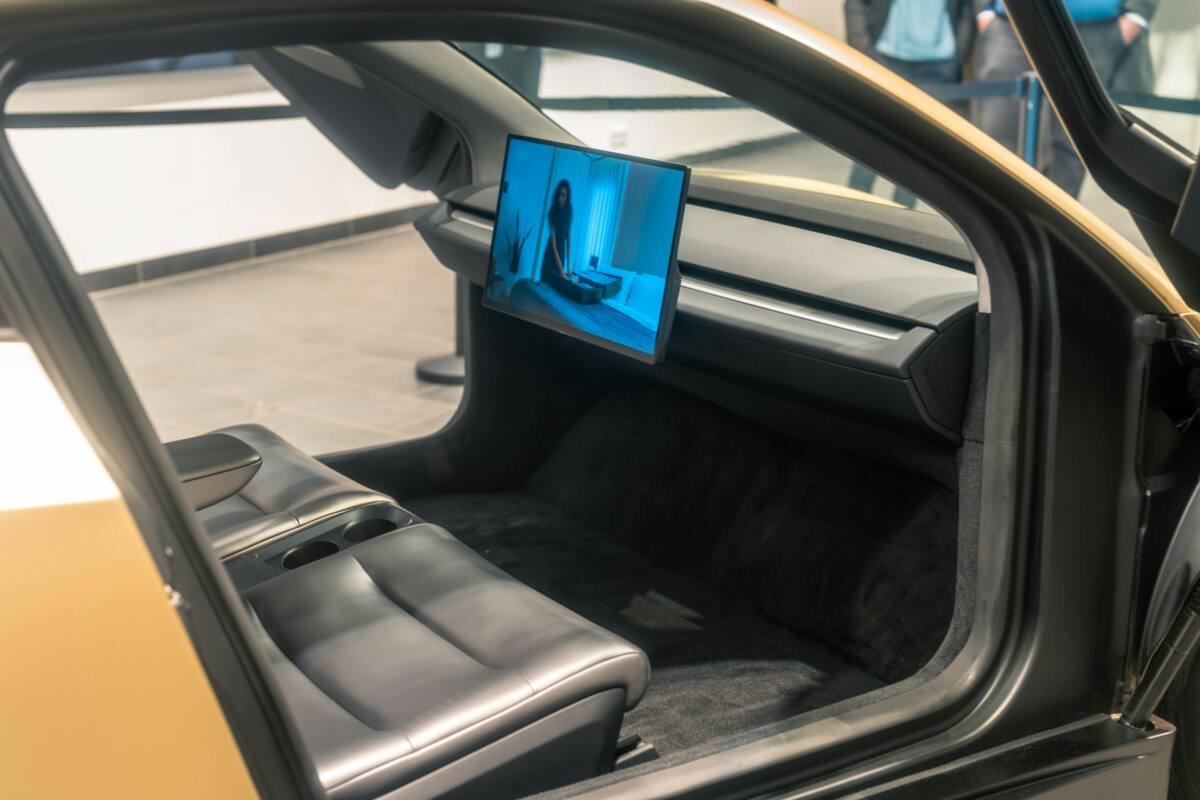
The Cybercab is Tesla’s first production vehicle built without any conventional manual controls at all. Per NHTSA documents, “the vehicles lack permanently attached, conventional manual controls, such as a brake pedal, gas pedal, steering wheel, and mirrors.” Tesla had 420 autonomous vehicles registered in Texas as of Friday morning, including 45 Cybercabs, and the company has said it plans to gradually expand deployment to other locations and vehicle models.
NHTSA Opens an Audit Query the Same Day
The National Highway Traffic Safety Administration opened Audit Query AQ26002 mere hours after the first Cybercabs hit Austin streets, examining the technical basis behind Tesla’s own self-certification that the vehicle meets Federal Motor Vehicle Safety Standards. “NHTSA fully supports the safe development and deployment of automated vehicles,” administrator Jonathan Morrison said in a statement. “But as the federal regulator, we need to ensure that all of our laws are followed.” Specifically, regulators want to see the process and technical data Tesla used to decide that certain federal safety standards simply don’t apply to a car with no human controls at all.
This Isn’t Tesla’s Only Open Investigation
The Cybercab probe lands on top of an already open NHTSA investigation into Tesla’s Full Self-Driving software, covering roughly 3.2 million vehicles following a string of visibility-related crashes, including one fatality in Arizona. The Cybercab reportedly runs on very similar FSD software, and separate footage from the Austin pilot has already shown instances of erratic driving — including a vehicle traveling down the wrong side of the road and braking unpredictably, both of which NHTSA says it is now looking into directly.
A Regulatory Environment That’s Actually Shifting in Tesla’s Favor
The timing here matters. In June, NHTSA proposed ending the government requirement for manual brake pedals in self-driving vehicles specifically, part of a broader push described as unleashing American innovation on autonomous vehicle rules. The agency also has authority to grant exemptions allowing up to 2,500 pedal-free vehicles per manufacturer per year on U.S. roads. In other words, Tesla isn’t fighting an regulatory environment trying to shut this down — it’s testing the edges of one that’s already being rewritten to accommodate exactly this kind of vehicle.
Bottom Line
An audit query doesn’t automatically halt Tesla’s rollout, and the company has continued putting riders in Cybercabs even after the investigation opened. But launching a driverless car with zero human controls, on the same day federal regulators start formally questioning how it was certified, is a genuinely unusual way to enter a new vehicle category. Whether this becomes a speed bump or a real roadblock depends on what NHTSA’s audit actually turns up — and given Tesla’s already-open FSD investigation covering millions of vehicles, this is clearly part of a much bigger regulatory conversation, not an isolated incident.