
Affiliate disclosure: As an Amazon Associate we earn from qualifying purchases. Links to Amazon in this post may earn us a commission at no extra cost to you. Learn more.
This guide is for anyone who has watched a phone hit 5 percent on a travel day and wants a power bank that fits their actual life, whether that is a pocketable top-up for a commute or a brick that can run a laptop on a long trip. Nobody here has tested these products hands-on. Everything below is based on manufacturer specifications and published reviews, and we name the source for each claim.
What matters when buying a power bank
Capacity in watt-hours, not just mAh. The big number on the box, such as 10,000 or 20,000 mAh, is measured at the internal battery voltage, not at the 5 volts your phone sees. Watt-hours (Wh) give a fairer comparison and are also what airlines care about. As a rule, US and most other airlines allow spare lithium batteries of 100 Wh or less in carry-on bags, while 100 to 160 Wh usually needs airline approval and bigger ones are generally not allowed. Check your airline before you fly. Real-world output is also lower than the label suggests: ParkaBlogs, reviewing UGREEN’s Nexode range, found usable capacity for USB devices was only about 55 percent of the advertised mAh and advised buyers to use the rated figure instead.
Output wattage for what you charge. A phone is happy with 20 to 30W. A tablet or a thin laptop wants more, and a performance laptop can want 100W or beyond. Buying far above what your devices can draw adds weight without adding speed. Digital Camera World noted that its test phones peaked around 40W on a 300W power bank, and that a MacBook Pro never drew the full 140W from a single port.
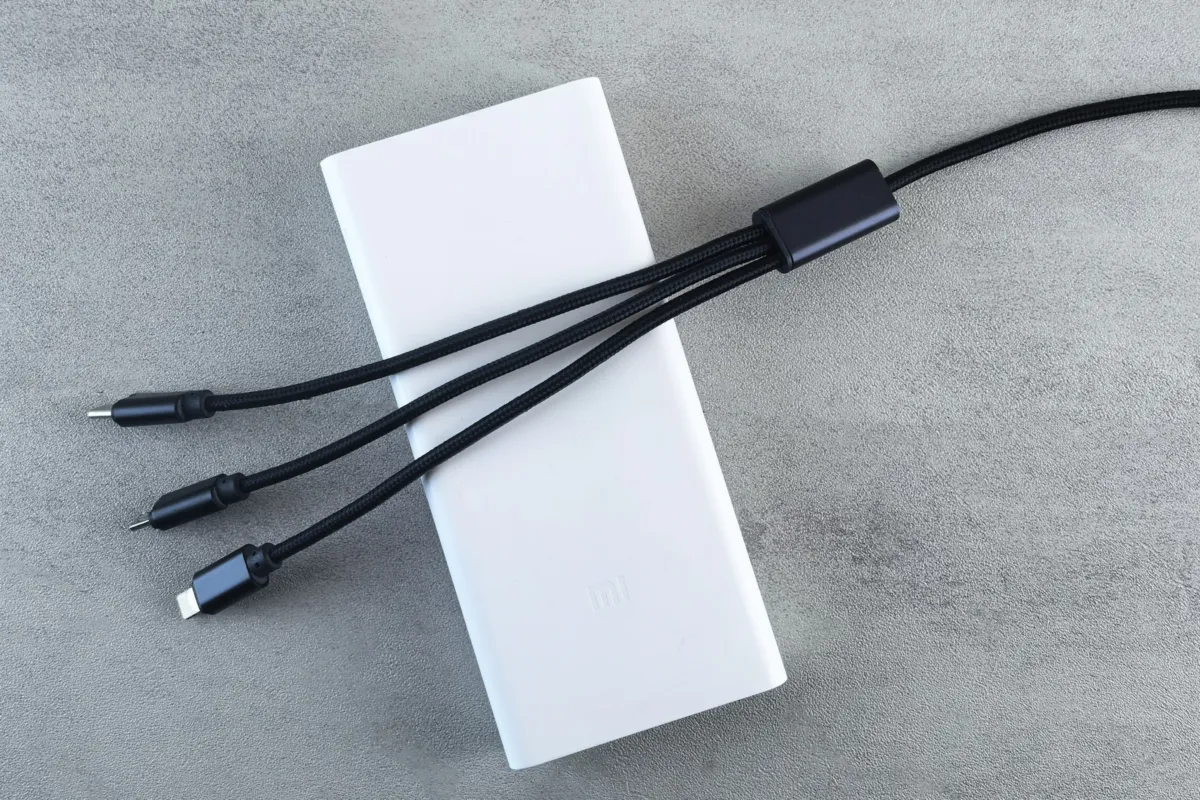
Ports and cable. Two USB-C ports beat one when you travel with a partner or a second device. A built-in cable removes one more thing to forget but ties you to its connector type and length. Also look at how the bank recharges itself, because a big bank that takes many hours to refill is a hassle.
What to ignore. Dramatic peak figures with no per-port breakdown, and any claim of a specific number of phone charges, since it depends on the phone.
Quick picks
These are three different kinds of buyer, not a ranking.
Anker Nano Power Bank (30W, built-in USB-C cable), 10,000mAh
Who it suits: commuters and light travelers who want something that lives in a coat pocket. Strengths: according to Anker’s product page it has a built-in USB-C cable, delivers up to 30W over that cable and the USB-C port, adds a USB-A port at up to 22.5W, and weighs 215 g (about 7.6 oz) at 104 x 52.3 x 26 mm. It recharges at up to 30W as well. Drawback: at 10,000mAh and 30W it is built for phones, tablets and small devices, not for a full-size laptop. Search for it on Amazon.
UGREEN Nexode 20,000mAh 130W power bank
Who it suits: someone who wants one bank for a phone, a tablet and a USB-C laptop. Strengths: in ParkaBlogs’ review table, the 20K model has a 130W maximum output, two USB-C ports and one USB-A, 72 Wh rated capacity and a TFT display, at 476 g. The reviewer liked that the 130W and 200W models show an estimated remaining time and said the power banks work as advertised. Drawback: the same review reports the 130W model stopped charging a laptop at around 10 percent because it could no longer supply enough wattage, and that it cannot be charged while it is charging another device. Search for it on Amazon.
Anker Prime Power Bank (26K, 300W)
Who it suits: travelers who want to charge a demanding laptop and several other devices at once. Strengths: Anker lists 26,250mAh (99.75 Wh, which it describes as a TSA-approved capacity), 300W total output, two USB-C ports of up to 140W each and a USB-A port of up to 22.5W, with a smart display and an app. Digital Camera World gave it 4 out of 5 stars and called it compact for its power, and it measured about an hour to refill the bank with a 140W GaN charger. Drawback: the same reviewer calls it overkill for many people and points out that it is heavy, listing it at 580 g, with Anker listing 600 g. It also costs noticeably more than standard power banks, according to that review. Search for it on Amazon.
Common mistakes
Buying for the biggest number. A 300W bank makes sense only if you own devices that can use it. For most phone-only users, the first pick covers what they need and fits in a pocket.
Forgetting the cable. High-wattage charging needs a cable rated for it. Anker notes that its fastest dual-port recharging needs 5A cables and 140W chargers, so check which cable you are using before blaming the bank.
Ignoring the flight rules. If you fly, keep the Wh figure in mind and keep power banks in your carry-on, not checked luggage.
Assuming wireless is just as good. Magnetic wireless power banks are convenient, but they are a different category. Our guide to choosing a Qi2 wireless charger explains the 15W and 25W differences, and our USB-C hub guide covers what to do when you run out of ports at your desk.
Bottom Line
Pick the smallest power bank that can charge your most demanding device at a useful speed. For phones, that is a compact 30W model. For a laptop plus a phone, look at 100 to 130W and watch the weight. For heavy travel with several devices, the 300W class exists, but be honest about whether you will use it. Remember that a bank is only part of a safe setup, so keep your wall power sorted with a good surge protector as well.
FAQ
How many mAh do I need?
For a phone top-up, around 10,000mAh is a common size. For laptops, look at watt-hours and output wattage rather than mAh, since the mAh figure is measured at a different voltage than your device sees.
Can I take a power bank on a plane?
Generally yes, in carry-on baggage and not in checked bags. Many airlines allow banks up to 100 Wh, and larger ones need approval, so check your airline’s rules. Anker lists its 26K Prime model as 99.75 Wh.
Do I need 100W or more?
Only if you plan to charge a laptop or other high-draw device from it. Review testing by Digital Camera World found a MacBook Pro never drew the full 140W from one port of a 300W bank, so more is not always faster.
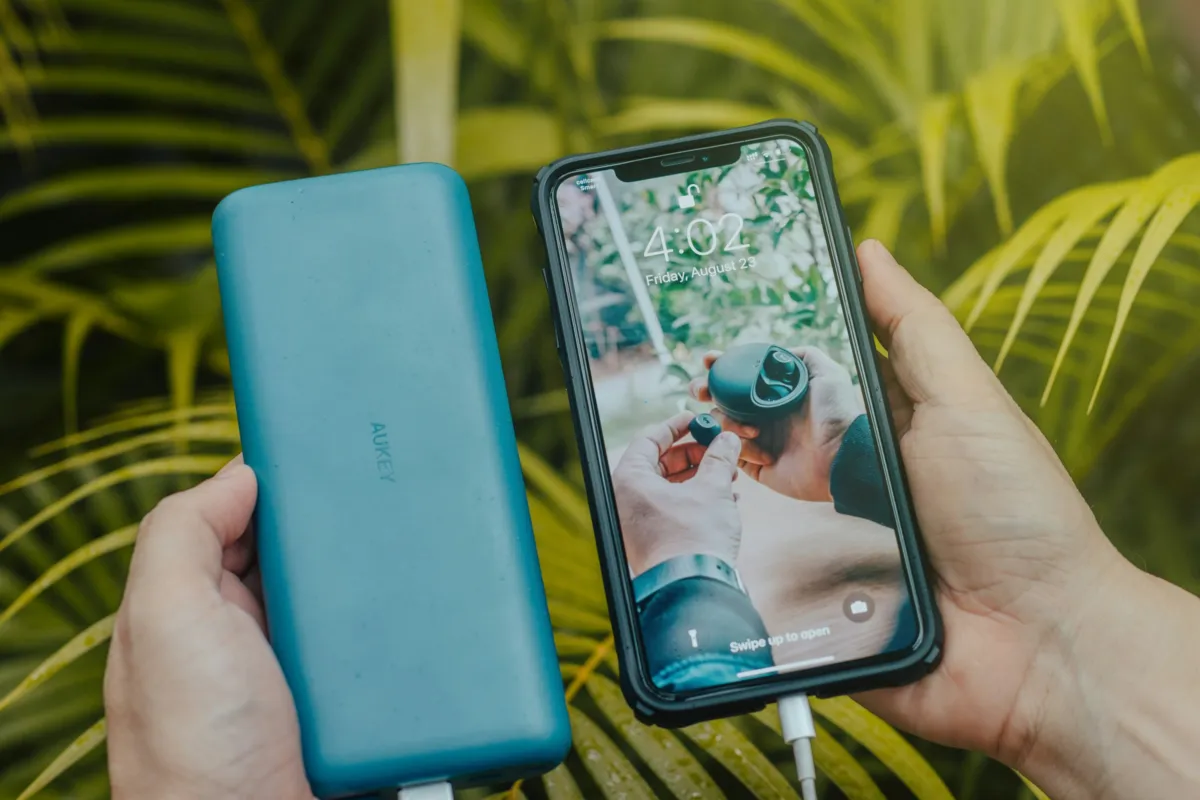
Featured image: Photo by I’M ZION on Unsplash.

No comments yet. Be the first to share your thoughts below.