
Affiliate disclosure: As an Amazon Associate we earn from qualifying purchases. Links to Amazon in this post may earn us a commission at no extra cost to you. Learn more.
This guide is for anyone who works on a laptop for hours and wants the screen higher without buying a monitor: home-office workers, students with a desk in a shared room, and people who carry a laptop between places. It is based on manufacturer specs and TechRadar’s published laptop stand roundup. We did not test these stands ourselves.
What matters when buying
Height and angle range. The whole point of a stand is to lift the screen toward eye level. A fixed-height stand is simple, but an adjustable one lets you fit the stand to your desk and chair. Check both the minimum and maximum height, and whether the tray angle can change.
Portable or permanent. A folding stand packs into a bag, but folding hinges tend to be where stiffness or wobble shows up. A fixed stand is steadier but stays on the desk. Decide which you are before you shop.
Stability while typing. A stand that wobbles every time you press a key gets annoying quickly. Look for a heavy base, grippy pads and a design that does not rely on a thin center hinge. TechRadar flags wobble on two of the stands below, so it is worth reading the cons.
Size and weight support. Check the laptop sizes the stand fits and, where listed, the maximum load. Most of the stands here cover roughly 10 to 17 inch laptops, but a heavy gaming laptop is a different question from an ultrabook.
Airflow. An open design lets heat escape from underneath, which can matter for hotter laptops. It is a nice extra, not a reason to choose a model on its own.
Fit to your desk and chair. Sit the way you normally work and note how far your eyes are above the desk, then compare that with the stand’s height range. A stand that barely lifts the screen does little, while one that is too tall can leave you looking up. Remember that raising the laptop also means reaching for a separate keyboard and mouse, so leave room on the desk for both.
What to ignore. Colour options and the exact material name. Aluminum is the common choice, but build quality and hinge design matter more than the metal.
Quick picks
These four come from TechRadar’s best laptop stands list and from the specs it reports. Availability and pricing change, so check the current listing before buying; we do not list prices.
Lamicall Laptop Stand: for a sturdy all-rounder that folds
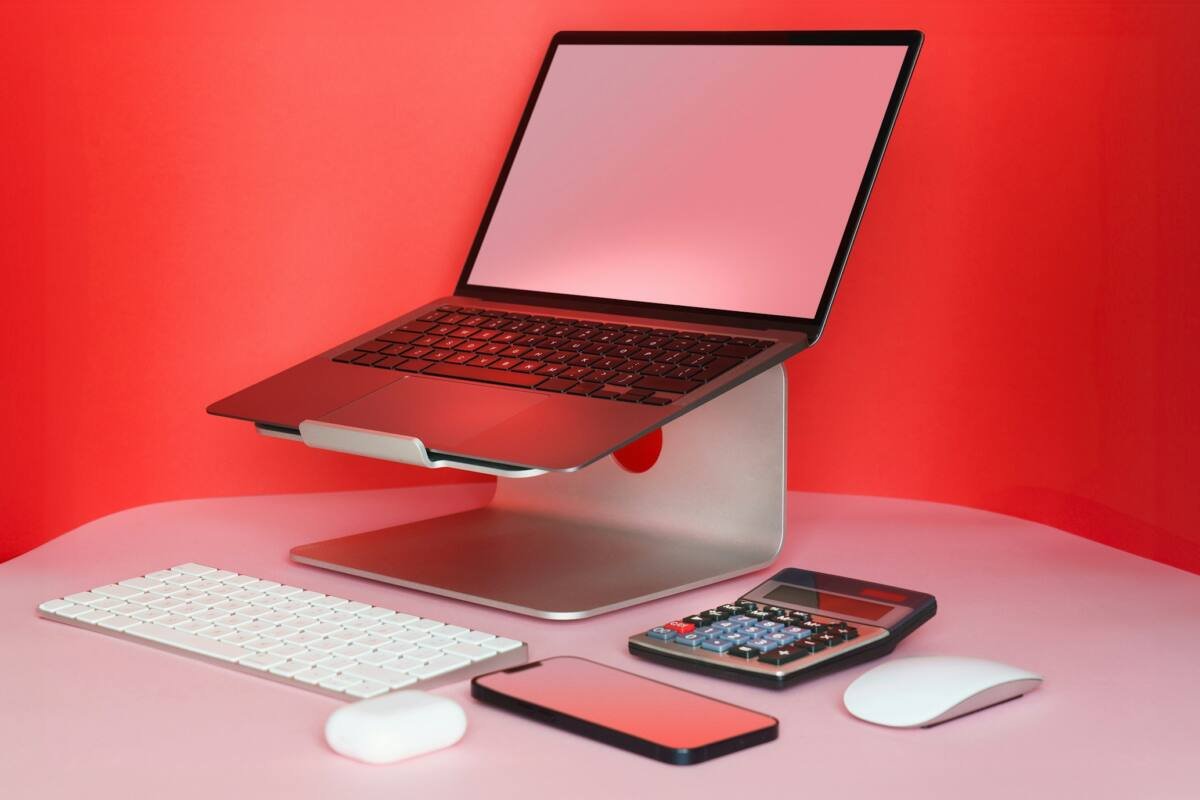
TechRadar names the Lamicall its best overall. It is aluminum alloy with anti-slip rubber, fits 10 to 17 inch laptops, weighs about 3.25 pounds and arrives assembled. TechRadar likes the heavy base, large rubber pads and the way it folds for portability. The drawback is that the hinge can be stiff and needs two hands. Lamicall laptop stand on Amazon
Brocoon Laptop Stand: for carrying around
TechRadar picks the Brocoon as best for portability. It extends to about 10.2 inches, folds to roughly 1.1 inches thick, fits 10 to 17 inch laptops and is listed as holding up to 40 pounds, with a cutout for accessories. The drawback is a slight wobble while typing. Brocoon laptop stand on Amazon
Rain Design iLevel2: for thin laptops on a fixed desk
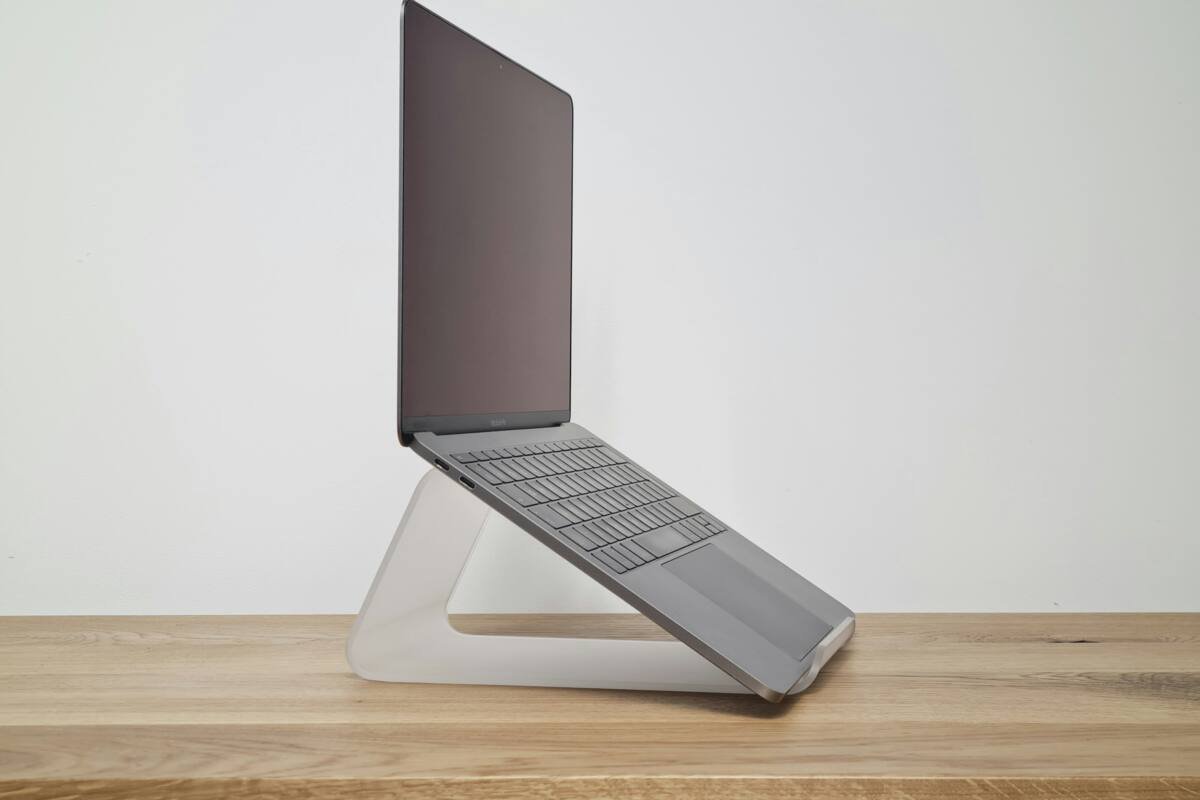
TechRadar’s best for ultrabooks is a minimalist anodized aluminum stand with a height range of about 5.4 to 7.9 inches and a slider at the front to set the angle. It suits MacBooks and similar light machines. The drawback, per TechRadar, is that it is not portable and works best if you also use an external keyboard and mouse. Rain Design iLevel2 on Amazon
Besign LSX3: for a permanent, adjustable setup
TechRadar’s choice for permanent setups is an aluminum stand with a rear knob that sets the height from about 4.9 to 7.7 inches, fits 10 to 15.6 inch laptops and supports up to 8.8 pounds, with an open design for cooling. The drawbacks are real: it needs assembly with four included Allen screws, has no tilt adjustment, is not portable and, TechRadar says, wobbles noticeably when typing. Besign LSX3 on Amazon
Common mistakes
The biggest is buying a stand and then typing on the laptop’s own keyboard. Once the screen is raised, the keyboard is too high to type on comfortably, so plan for a separate keyboard and mouse. If you are shopping for one, our guide to wireless mechanical keyboards covers the choices.
The second is ignoring weight. A stand rated for a light laptop may not suit a big workstation machine, and not every product publishes a limit. The third is buying a folding stand when you never travel, giving up stability you did not need to. Finally, remember that a raised laptop camera changes your video-call framing. If you take a lot of calls, our webcam guide is worth a look.
Bottom Line
If you move around, TechRadar’s picks suggest the Lamicall or Brocoon. If your laptop stays on one desk, the Rain Design iLevel2 for thin machines or the adjustable Besign LSX3 are the fixed options. In every case, budget for an external keyboard and mouse.
FAQ
Do I need a laptop stand?
Only if you want the screen higher. It is useful for long desk sessions, but you will need a separate keyboard and mouse to type comfortably.
Will a laptop stand block my laptop’s fans?
Most open designs leave the underside exposed. Check that the stand does not cover vents on your specific model.
What size laptop does a stand fit?
The Lamicall and Brocoon list 10 to 17 inch laptops. The Besign LSX3 lists 10 to 15.6 inches. Always check the listing for your exact laptop.
Featured image: Photo by Workperch on Unsplash.

No comments yet. Be the first to share your thoughts below.