For thirty years, astronomers have been finding rocky planets around other stars, and for thirty years they’ve had to wonder whether any of them actually kept their air. This summer, one finally answered the question: LHS 1140 b, a rocky world 48 light-years away, has an atmosphere — the first ever confirmed on a rocky planet sitting in another star’s habitable zone.
The Planet Almost Didn’t Get a Second Look
LHS 1140 b was discovered back in 2017, a super-Earth about 5.6 times as massive as our planet, orbiting a cool, quiet red dwarf star once every 24.7 days. Being close to a dim star is exactly what puts it in the habitable zone — red dwarfs are so much cooler than the Sun that “close” still means comfortable, temperature-wise anyway. The planet’s estimated surface temperature sits around -47°C, which sounds harsh until you remember that’s roughly Antarctica’s winter average, not a dead world.
What nobody knew until this July was whether LHS 1140 b had held onto any atmosphere at all, or whether stellar radiation had stripped it bare billions of years ago, the way it’s believed to have happened to most rocky planets hugging small, active stars.
How They Found It: Watching Helium Leak Into Space

The breakthrough came from an unusual angle. Harvard PhD student Collin Cherubim wasn’t originally hunting for a habitable-zone atmosphere — he’d built a model predicting which exoplanets should have helium-dominated atmospheres, based on how planets evolve over billions of years. LHS 1140 b happened to be one of his predictions, and the habitable-zone location was, in his words, “a total bonus.”
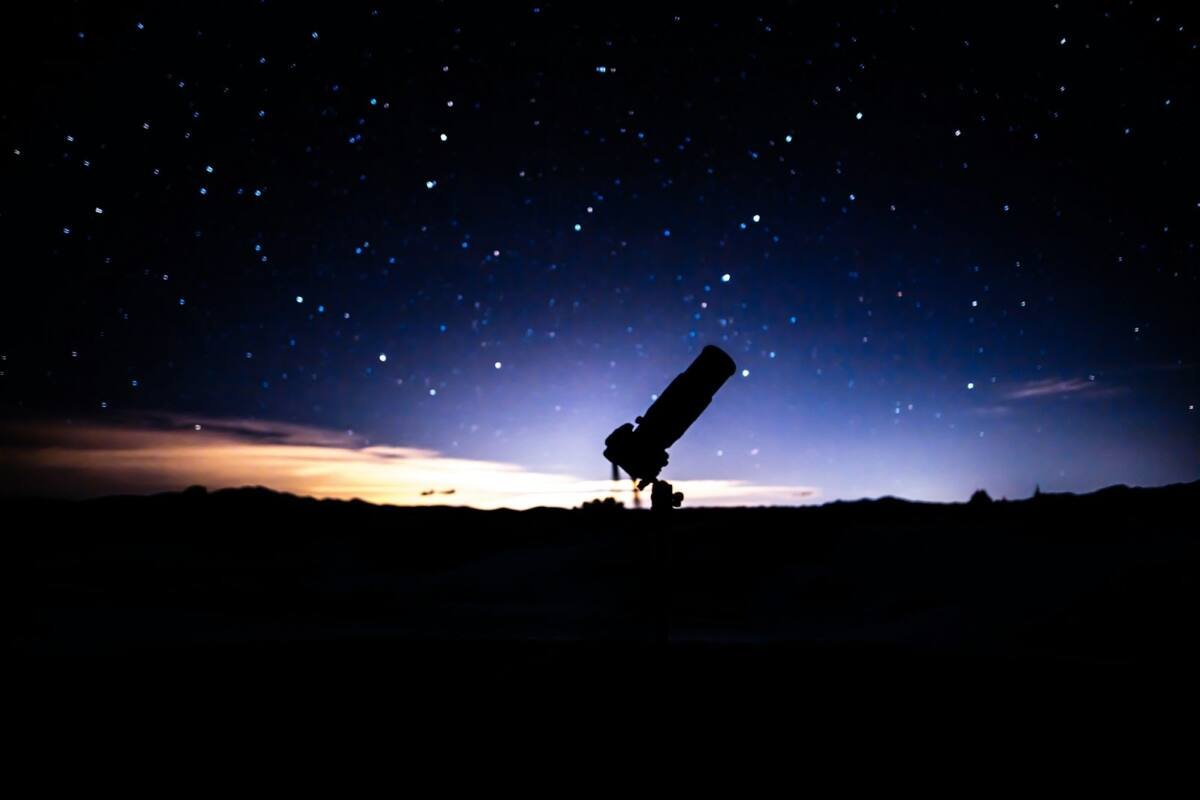
Using the WINERED spectrograph on the Magellan Clay telescope in Chile, the team watched the planet transit its star and looked for a specific signature: helium gas escaping from the upper atmosphere, heated and pushed outward by X-rays and ultraviolet radiation from the star. They found it clearly in 2024 observations. A repeat look in 2025 found less of a signal, suggesting the rate of atmospheric escape actually varies over time — a detail nobody could have predicted in advance.
Why Helium, Not Oxygen or Water Vapor
This isn’t a Star Trek-style habitable atmosphere. The upper layer of LHS 1140 b’s atmosphere appears to be dominated by helium and largely stripped of hydrogen, with heavier molecules like water likely trapped in lower, unobserved layers. Researchers describe two live possibilities: either the planet holds a thick, Neptune-like envelope of light gases, or it’s covered in far more water than Earth has, with a much thinner atmosphere on top. Distinguishing between those two pictures is the next major target for follow-up observations, and the James Webb Space Telescope is a leading candidate for cracking it open.
Why This Actually Matters
An atmosphere is one of the baseline requirements for a planet to support life as we understand it — it regulates temperature, blocks radiation, and can trap the ingredients life needs. Until this discovery, every rocky habitable-zone planet astronomers had studied showed no confirmed sign of one, feeding a real worry that the “cosmic shoreline” — the line separating planets that keep atmospheres from ones that lose them to their star — might exclude most small, rocky worlds around common red dwarf stars. LHS 1140 b’s neighboring planet, LHS 1140c, shows no such atmosphere at all, reinforcing that this isn’t automatic even within the same solar system.
Harvard astronomer Robin Wordsworth, who wasn’t initially convinced the project would pan out, put it plainly: researchers have spent two decades confirming rocky exoplanets exist, then confirming some sit in habitable zones. “The next question was whether any of them had managed to keep an atmosphere. Now we know at least one has.”
Bottom Line
This isn’t the discovery of an Earth twin, and nobody involved is claiming signs of life. What it is: the first hard evidence that a rocky planet in another star’s habitable zone can hold onto an atmosphere at all — a question that’s been open since exoplanet science began. That single confirmed “yes” reshapes how astronomers think about where to look next, and LHS 1140 b, at just 48 light-years away, is now one of the most closely watched targets in the sky.
FAQ
Does this mean LHS 1140 b could support life?
Not confirmed either way. Having an atmosphere is a necessary condition for habitability, not proof of it. Researchers still need to determine the atmosphere’s full composition before drawing any conclusions about habitability.
How far away is LHS 1140 b?
About 48 light-years from Earth, in the constellation Cetus — relatively close by exoplanet standards, which is part of why it’s such an attractive target for follow-up study.
What telescope could study it next?
The James Webb Space Telescope is considered a strong candidate for follow-up observations, since it could help determine whether the atmosphere is dominated by light gases or by water vapor trapped beneath a thinner outer layer.